
 +18886827012



Publishing
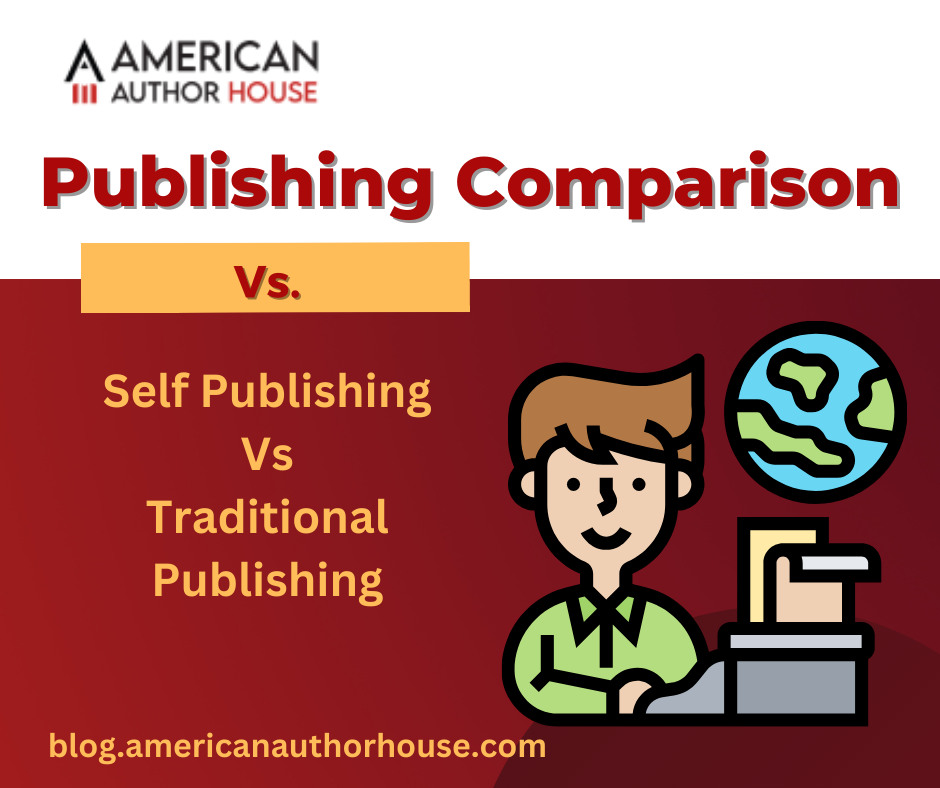
In today’s tech-savvy world, authors have more chances than ever to share their stories. The discussion about whether to self-publish or go with traditional publishing is important. Aspiring authors must know the publishing comparison and make smart decisions navigating the complicated publishing landscape.
Publishing Comparison: Pros and Cons of Self-Publishing
Let’s discuss the pros and cons of self-publishing.
Flexibility and Control
Pros
Self-publishing lets authors decide everything about their book – the cover, the content, and when it comes out. They have full control and can be as creative as they want.
Authors get to choose when they release their books. This means they can pick a special time for them or when people are interested in that book.
Cons
Authors have to do many different jobs, like editing and marketing. It’s a big responsibility and can be a lot of work.
Marketing and Promotion
Pros
Authors can directly talk to their readers through social media and blogs. They can make their marketing plans and earn more money from each book they sell.
Since there’s no big company taking a lot of money, authors make more money for each book sold. This is good for their pockets.
Cons
Even though authors can talk to readers directly, it’s hard for them to get noticed without a renowned book publishing services helping. There’s a lot of competition, and it takes time to stand out.
Making and doing marketing plans takes a lot of time. Authors spend a good amount of time promoting their work, which means less time for writing.
Potential Challenges and Costs
Pros
Self-publishing can be cheaper than traditional publishing. Authors save money because they don’t have to pay a big company to help them.
Cons
Even though it’s cheaper, authors must spend money on editing and marketing. If they don’t spend enough, their book might not do well.
Big publishers such as American Author House have many ways to get books to many places. Self-published authors might find it hard to get their books everywhere, so not everyone can read them.
Publishing Comparison: Traditional Publishing: Pros and Cons
Here are the traditional publishing pros and cons
Pros
Established Support System
Traditional publishers offer a lot of help. They have experts or professional services like editing and designing the book, ensuring it looks good and follows all the rules.
Distribution and Bookstore Access
Authors get their books into many stores and libraries because traditional publishers have good connections. This can be hard for self-published authors.
Con
Limited Creative Control
Authors might have to give up some control over their work. Publishers could ask for changes to make the book more popular, even if the author doesn’t agree.
Longer Publishing Timelines
It takes a long time to go through the whole traditional publishing process. It can take a while from sending the book to getting it on shelves. This makes it hard to respond quickly to what people want to read.
Publishing Comparison: Self-Publishing Costs
If you decide to publish your book on your own, you need to spend money on two important things: editing and book cover design.
Editing
You have to hire someone to ensure your writing is good and error-free. This is important so that people enjoy reading your book.
Cover Design
You also need a nice and attractive cover for your book. People often judge a book by its cover, so it’s worth spending on professional design.
Publishing Comparison: Self-Publishing Distribution and Marketing Budget
Getting people to notice your self-published book is not easy. You have to set aside some money for two things:
Distribution Platforms
You have to pay fees to put your book on websites like Amazon. If you want physical copies, printing on demand is an extra cost.
Marketing
You need to tell people about your book. This includes advertising on social media, getting reviews, and maybe even going to book events. You may also want to give away some copies to create excitement.
Publishing Comparison: Traditional Publishing Expenses
If you want a traditional publisher to publish your book, some costs are involved, too.
Agent Fees
You might need to hire an agent who helps you deal with publishers. They take a percentage of the money you make.
Advances and Royalties
Traditional publishers might give you an advance, like an upfront payment. But you only start making more money if your book sells well and earns back the advance.
Publishing Comparison: Perception of Self-Published Work Quality and Credibility
People might doubt if they’re good enough when it comes to self-published books. Authors should ensure their books are professionally edited and designed to overcome this.
Self-published authors can boost their credibility by doing a few things. They should work on building a strong presence as an author, getting positive reviews, and participating in community activities.
Publishing Comparison: Traditional Publishing’s Reputation
Getting a book published by a traditional publisher gives it certain approval. This makes authors feel validated and recognized in the literary world.
If an author is linked to well-known publishers, it can enhance their reputation. This might also lead to more opportunities in the future.
Publishing Comparison: Self-Promotion for Self-Published Authors
For authors who publish their books, it’s important to use social media to create a personal brand, connect with readers, and tell people about their books. Authors can make a website, blog, or newsletter to gather a group of loyal readers and advertise their books well.
Publishing Comparison: Help from Publishers for Traditional Authors
Authors working with traditional publishers often get the chance to go on book tours and get featured in the media, which helps them get noticed and sell more books.
Authors also use the publisher’s connections with book reviewers, book marketing services, and sellers, which is a big advantage.
Publishing Comparison: Time-to-Market Comparison
If you’re a writer publishing your books, you can get them out to the public quickly. This means you can take advantage of current trends and ensure your books are always available.
Even though being fast is good, self-published authors must ensure their work is still high quality. Speed shouldn’t mean compromising on the overall excellence of your writing.
Publishing Comparison: Traditional Publishing Takes More Time
If you choose traditional publishing, getting your book out there takes longer. The entire process, from submitting your manuscript to undergoing editing and marketing, can extend over a more extended period.
This longer timeline in traditional publishing can affect your writing career. It might slow down your progress and trajectory as an author. To succeed, you’ll need patience and a well-thought-out plan.
Publishing Comparison: Self-Publishing Obstacles
As more and more people publish their own books, it’s becoming crowded out there. This can make it tough for new writers to get noticed among all the other released books. For authors just starting, figuring out how to use different self-publishing websites can be confusing and stressful.
Publishing Comparison: Traditional Publishing Hurdles
The traditional publishing route often involves facing rejection from literary agents and publishers, requiring persistence and resilience. Authors must be open to editorial suggestions and changes, adapting their work to align with the publisher’s vision.
Future Trends in Self-publishing
Continual technological advancements, including enhanced e-book formats and online marketing tools, will shape the future of self-publishing. Understanding and adapting to evolving reader preferences will be crucial for the sustained success of self-published authors.
Innovations in Traditional Publishing
Traditional publishers will likely embrace digital initiatives and form strategic partnerships to stay relevant in a digitally dominated market. Remaining responsive to emerging market demands, such as sustainability and inclusivity, will be essential for traditional publishers.
FAQS
Can A Traditionally Published Author Switch to Self-Publishing?
Many traditionally published authors have successfully transitioned to self-publishing, enjoying the benefits of creative control and faster release schedules.
Are There Any Genres More Suited to Traditional Publishing?
Traditional publishing often excels in genres like literary fiction, where industry connections and marketing campaigns are crucial to an author’s success.
How to Promote Your Ebook in Self-Publishing?
Promoting your eBook in self-publishing involves leveraging social media, optimizing book descriptions, seeking reviews, and utilizing promotional pricing and giveaways.
What Is the Role of Book Writing Services in Traditional Publishing?
Book writing services play a vital role in traditional publishing by offering professional manuscript editing, developmental editing, book cover design, formatting, market research, and genre analysis.
Do Ebook Writing Services Help in Self-Publishing?
Yes, eBook writing services contribute significantly to self-publishing by providing professional content creation, efficient manuscript editing, eye-catching eBook covers, and guidance on marketing and positioning.
| Self-Publishing: Pros and Cons | Traditional Publishing: Pros and Cons | Self-Publishing Costs |
|---|---|---|
| Flexibility and Control | Established Support System | Editing |
| Authors have full control and can be creative | Experts help with editing and design | Ensure writing is error-free |
| Authors can choose release time | Distribution and Bookstore Access | Book Cover Design |
| Special time or when people are interested | Books in many stores and libraries | Attractive and professional cover |
| Marketing and Promotion | Limited Creative Control | Self-Publishing Distribution and Marketing Budget |
| Directly talk to readers through social media | Author may have to give up some control | Fees for distribution platforms |
| Earn more money per book sold | Longer Publishing Timelines | Budget for advertising and reviews |
| Potential Challenges and Costs | Traditional publishing process takes time | Traditional Publishing Expenses |
| Can be cheaper, but editing and marketing costs | It takes time from submission to bookshelves | Agent Fees |
| Self-published authors may struggle to reach | Slower response to reader trends | Advances and Royalties |
Conclusion
The choice between self-publishing and traditional publishing is a deeply personal decision. Authors must understand the publishing comparison, considering their creative goals, financial situation, and long-term career aspirations. While self-publishing offers autonomy and rapid release possibilities, traditional publishing provides established support systems and industry validation. A hybrid approach, combining elements of both, may offer some authors the best of both worlds.